
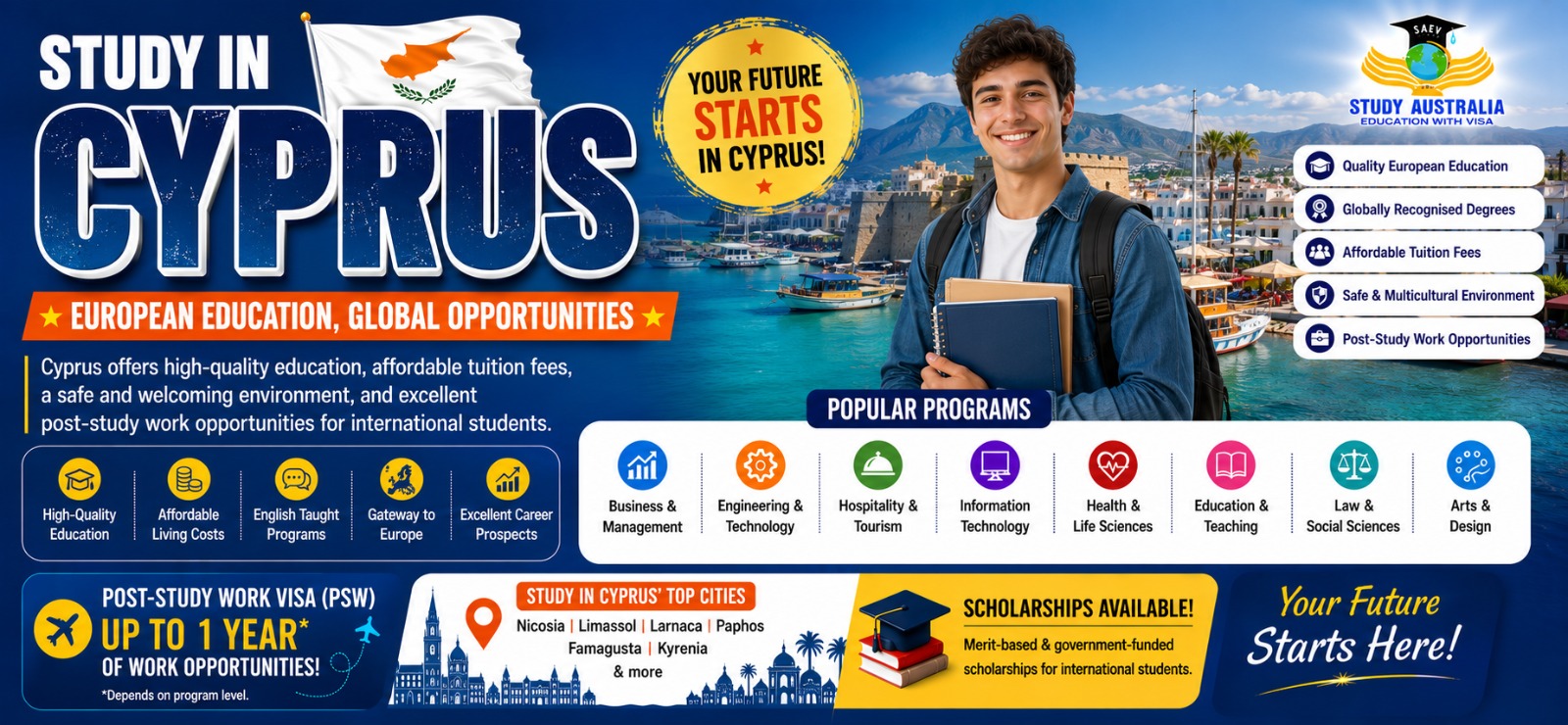
Cyprus is an island country located in the eastern Mediterranean Sea, at the crossroads of Europe, Asia, and Africa. It is well known for its rich history, pleasant Mediterranean climate, safe environment, and high-quality education system. Cyprus has become an increasingly popular study destination for international students due to its internationally recognised universities, affordable tuition fees, and English-taught programmes.
The country offers a welcoming multicultural environment where students from different parts of the world study together. Modern campuses, experienced academic staff, and strong links with European education standards make Cyprus an attractive choice for higher education. Degrees awarded by recognised universities in Cyprus are widely accepted internationally, allowing graduates to pursue careers or further studies across Europe and many other countries.
Every year, thousands of international students choose Cyprus because of its affordable education, reasonable living costs, and excellent student support services. Many universities maintain partnerships with institutions throughout Europe, providing opportunities for student exchange programmes and international collaboration. Students also benefit from a safe lifestyle, modern infrastructure, and a friendly local community
Why Study in Cyprus?
Cyprus has emerged as one of the preferred destinations for international students seeking quality education at an affordable cost. The country offers a wide range of undergraduate and postgraduate programmes taught in English across disciplines such as Business, Engineering, Information Technology, Hospitality, Health Sciences, Education, and Social Sciences.
Cyprus follows the European Higher Education Area (EHEA) standards, ensuring internationally recognised qualifications and high academic quality. Many universities also participate in the Erasmus+ programme, allowing students to gain valuable international experience through exchange opportunities.
For Bangladeshi students, Cyprus offers several advantages, including comparatively lower tuition fees, affordable living expenses, straightforward admission procedures, and a multicultural learning environment. Graduates may also benefit from practical training opportunities and pathways to further study or employment in Europe, depending on individual qualifications and immigration regulations.
Some of the major reasons to study in Cyprus include:
- Internationally recognised universities.
- English-medium degree programmes.
- Affordable tuition fees and living costs.
- Safe and welcoming environment for international students.
- Degrees aligned with European education standards.
- Multicultural campuses with students from many countries.
- Opportunities for internships and practical learning.
- Access to European exchange programmes through Erasmus+.
Click here to see the list of Cyprus universities.
Cyprus Education System
Teaching standards in Cyprus are well recognised and closely aligned with the European Higher Education Area (EHEA) and the Bologna Process, ensuring that qualifications awarded by recognised institutions are internationally accepted. Higher education in Cyprus is offered through public and private universities, as well as colleges that provide a wide range of academic and professional programmes.
Study Levels
The education system in Cyprus consists of the following stages:
- Pre-primary Education
- Primary Education
- Secondary Education
- Higher Education
Qualifications Framework
Cyprus follows the Cyprus Qualifications Framework (CyQF), which is aligned with the European Qualifications Framework (EQF). This framework ensures consistency in academic standards and allows qualifications obtained in Cyprus to be recognised across many European countries and beyond.
Quality Assurance System
The quality of higher education in Cyprus is supervised by the Cyprus Agency of Quality Assurance and Accreditation in Higher Education (CYQAA). This independent authority evaluates higher education institutions and academic programmes to ensure they meet national and European quality standards.
Students are encouraged to choose universities and programmes that have received the necessary accreditation to ensure their qualifications are internationally recognised.
Higher Education
Higher education in Cyprus includes Bachelor’s, Master’s, and Doctoral degrees. Many universities also offer foundation programmes, English language preparation courses, and pathway programmes for students who do not meet direct entry requirements.
Undergraduate Courses
Undergraduate programmes are designed to provide students with both theoretical knowledge and practical skills. Cyprus offers degree programmes in areas such as Business, Engineering, Computer Science, Hospitality, Tourism, Health Sciences, Education, Social Sciences, and many other disciplines.
Below is an overview of the common undergraduate qualifications available in Cyprus:
| Program | Duration |
| Higher Certificate | 1 year |
| Diploma | 2 years |
| Higher Diploma | 3 years |
| Bachelor’s Degree (BA, BSc, BEng, etc.) | 4 years |
Postgraduate Studies
Postgraduate education in Cyprus allows students to specialise in their chosen field through advanced academic study and research. Most Master’s programmes are designed to be completed within one to two years, depending on the university and programme structure.
Below is an overview of postgraduate qualifications available in Cyprus:
| Program | Duration |
| Postgraduate Diploma | 1 year |
| Master’s Degree (MA, MSc, MBA, MEng, etc.) | 1 to 2 years |
| Doctor of Philosophy (PhD) | 3 to 5 years |
Pathway Programmes
Many universities and colleges in Cyprus offer pathway programmes, including Foundation and English language courses, for students who require additional academic or English language preparation before progressing to a degree programme. These programmes help students meet university entry requirements and improve their chances of academic success.
Cyprus Fees for International Students
The tuition fees in Cyprus vary depending on the university, study programme, and level of study. Compared to many other European countries, Cyprus offers quality education at relatively affordable tuition fees, making it an attractive destination for international students, including those from Bangladesh.
The overall cost of studying depends on factors such as the institution, course duration, accommodation, and personal lifestyle. Public universities generally have lower tuition fees than private universities, although private institutions offer a wider variety of English-taught programmes.
Tuition Fees
The tuition fee you pay will depend on your chosen university and programme. Courses in Business, Hospitality, Social Sciences and Humanities are generally more affordable, while Engineering, Health Sciences and specialised programmes may have higher tuition fees.
| S.No. | Study Program | Average Tuition Fee |
| 1 | Undergraduate Bachelor’s Degree | €3,500 to €9,000 per year |
| 2 | Postgraduate Master’s Degree | €5,000 to €10,000 per year |
| 3 | Doctoral (PhD) Degree | €5,000 to €8,000 per year |
* Please note: The above figures are approximate and may vary depending on the university and programme. Some PhD programmes may offer tuition waivers or research funding.
Accommodation Cost
Most universities in Cyprus assist international students in finding suitable accommodation. Students may choose university residences, private apartments, shared accommodation, or homestays depending on their budget and preference.
When selecting accommodation, students should consider:
- Monthly rent
- Utility bills
- Internet availability
- Transportation
- Deposit requirements
- Tenancy agreement
- Distance from the university
- Nearby facilities
The cost of accommodation varies by city. Living in Nicosia or Limassol is generally more expensive than in smaller cities such as Larnaca or Paphos.
Estimated Living Expenses
Besides tuition fees, students should budget for accommodation, food, transport, health insurance, books, and personal expenses.
| Expense | Approximate Monthly Cost |
| Accommodation | €250 – €600 |
| Food | €180 – €300 |
| Transportation | €30 – €70 |
| Internet & Utilities | €70 – €150 |
| Personal Expenses | €100 – €250 |
The average monthly living cost for an international student in Cyprus is approximately €700 to €1,200, depending on lifestyle and city of residence.
Please Note: Tuition fees and living costs are indicative only and are subject to change according to the university, accommodation type, exchange rates, and personal spending habits.
Scholarships to Study in Cyprus
Universities in Cyprus offer a variety of scholarships and financial assistance programmes to support international students. Scholarship availability, eligibility criteria, and award amounts vary between institutions. Most scholarships are awarded based on academic performance, while some are offered based on financial need, sporting achievements, or other outstanding accomplishments.
Bangladeshi students are encouraged to apply for scholarships at the time of admission and check the official website of their chosen university for the latest scholarship information and application deadlines.
Here are some common scholarship opportunities available for international students in Cyprus:
| S. No. | Name of the Scholarship | Description |
| 1 | Merit-Based Scholarships | Awarded to students with outstanding academic results. Many universities provide partial tuition fee reductions based on previous academic performance. |
| 2 | Academic Excellence Scholarships | Offered to high-achieving undergraduate and postgraduate students. Scholarship value varies depending on the university and academic results. |
| 3 | Sports Scholarships | Available at selected universities for students who have demonstrated excellence in sports at national or international level. |
| 4 | Need-Based Financial Assistance | Some universities provide financial assistance to eligible international students based on financial circumstances and supporting documentation. |
| 5 | University-Specific Scholarships | Many public and private universities in Cyprus offer scholarships, tuition discounts, or bursaries specifically for international students. Eligibility and award amounts differ between institutions. |
Please Note: Scholarship availability, award amounts, eligibility requirements, and application deadlines may change each academic year. Bangladeshi students are advised to begin searching for scholarships 8–12 months before their preferred intake and always refer to the official website of their chosen university for the most up-to-date information.
Work and Study in Cyprus
International students in Cyprus have the opportunity to work while studying, allowing them to gain practical experience and help cover part of their living expenses. Students must ensure that their employment does not interfere with their academic studies and should always comply with the conditions of their student residence permit.
While Studying
Part-Time Work
International students from non-EU/EEA countries, including Bangladesh, are generally permitted to work up to 20 hours per week during their studies, subject to the conditions of their student permit and Cyprus immigration regulations.
Full-Time Work
During official university holidays and semester breaks, eligible students may work full-time, provided they continue to meet the requirements of their student residence permit.
Working while studying allows students to:
- Gain valuable international work experience.
- Improve communication and professional skills.
- Build industry connections.
- Help manage day-to-day living expenses.
Many degree programmes also include internships or practical training opportunities that enable students to gain relevant industry experience.
After Graduation
Graduates wishing to remain in Cyprus after completing their studies must obtain an appropriate residence or work permit in accordance with Cyprus immigration regulations.
Students who receive a job offer from a Cyprus employer may be eligible to apply for a work permit if they satisfy the relevant immigration and employment requirements.
Those intending to remain in Cyprus after graduation should seek guidance from their university’s international office or the Cyprus immigration authorities regarding available post-study options.
Documents Commonly Required for Employment
When applying for part-time employment, students may be required to provide:
- Valid passport
- Valid residence permit
- Student registration or enrolment certificate
- Employment contract (if applicable)
- Social insurance registration (where required)
- Tax Identification Number (if applicable)
Please Note: Employment regulations, working hours, eligible sectors, and post-study work policies may change. Bangladeshi students are advised to check the latest requirements with the Cyprus Department of Civil Registry and Migration, their university, or the relevant government authority before accepting employment.